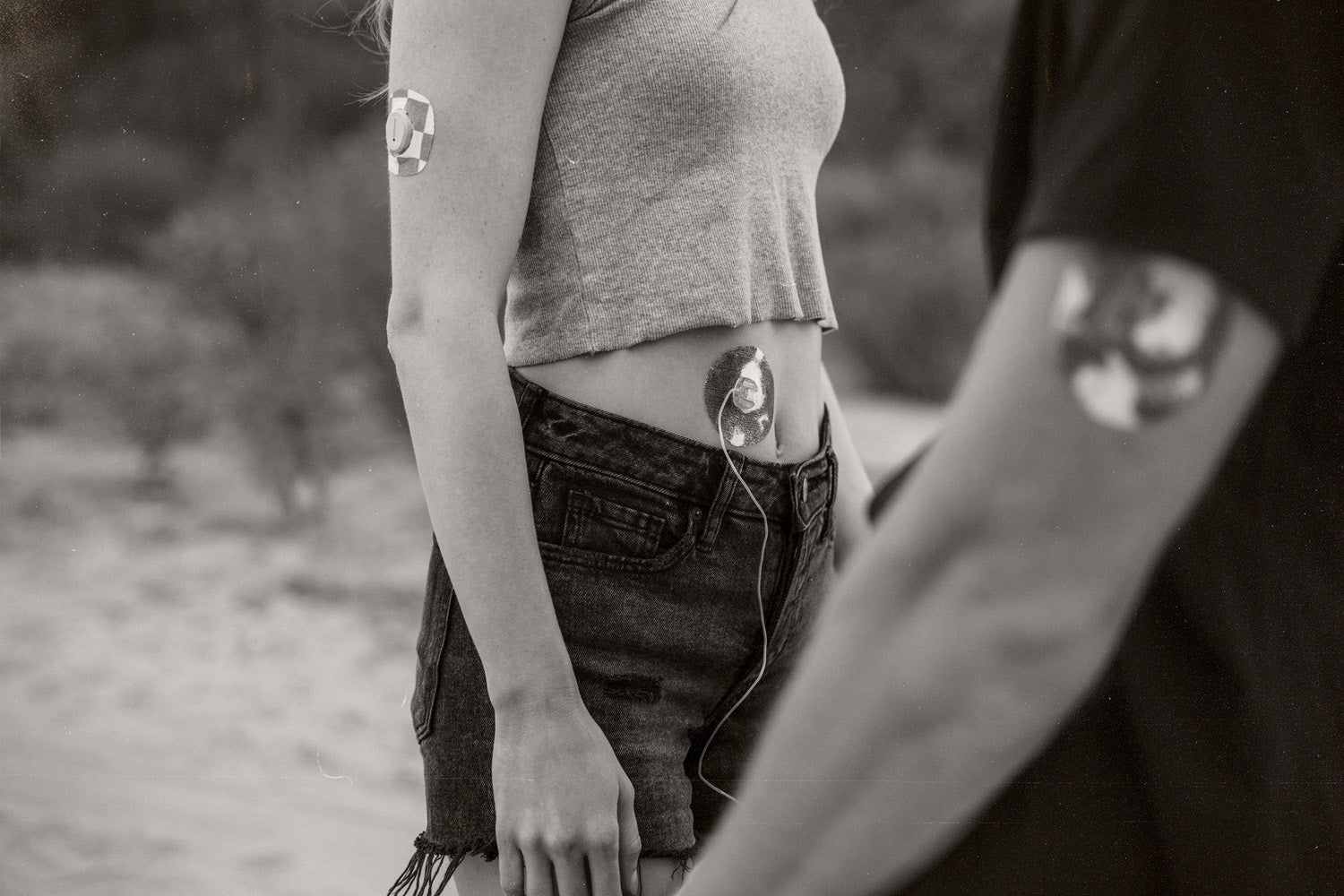
If you wear a CGM, chances are you’ve wondered at some point: would the other one work better for me? Maybe your sensor doesn’t always last the full wear time, alerts feel overwhelming, or you’re curious about features you’ve heard other people talk about.
Dexcom and FreeStyle Libre 3+ are two of the most widely used CGM systems, and both have their respective pros and cons list. While they ultimately serve the same purpose, the experience of wearing them day to day can feel quite different depending on things like wear time, alerts, integrations, and how they fit into your overall tech setup.
In this guide, we’ll break down the practical differences between Dexcom and Libre so you can better understand what each system offers and why some people prefer one over the other.
What Dexcom and Libre Have in Common
At a basic level, Dexcom and Libre systems do the same thing: they continuously measure glucose levels through a small sensor worn on the body and send those readings to a smartphone or receiver.
Both systems:
- Track glucose trends throughout the day
- Display readings on a mobile app
- Allow data sharing with caregivers or family members
- Reduce the need for frequent fingerstick testing
They’re also both small and discreet, roughly the size of stacked coins, and worn on the skin for multiple days at a time.
Dexcom CGM Systems
Dexcom’s newest CGM is the Dexcom G7, their smallest CGM yet that will replace all G6 sensors after the announced discontinuation in July of 2026.
Key features
- Wear time: 10 days or 15 days depending on the version, plus a 12 hour grace period
- Warm-up time: 30 minutes
- Glucose readings: every 5 minutes
- Alerts: customizable high, low, and predictive alerts
- Data sharing: Dexcom Follow allows up to 10 followers
- Integrations: Omnipod 5, Tandem t:slim X2, Tandem Mobi, and Beta Bionics iLet Bionic Pancreas
One of Dexcom’s biggest strengths is device integration. Because of the wide variety of choice, Dexcom is often the CGM used in hybrid closed-loop pump systems.
FreeStyle Libre CGM Systems
Abbott’s FreeStyle Libre family has become one of the most widely used CGM platforms globally. The latest version compatible with closed loop systems is FreeStyle Libre 3+.
Key features
- Wear time: 15 days
- Warm-up time: 60 minutes
- Glucose readings: every minute
- Very small sensor: one of the smallest CGM sensors available
- Data sharing: LibreLinkUp allows data sharing with up to 20 followers
- Integrations: Tandem t:slim X2, Beta Bionics iLet Bionic Pancreas, Sequel Med Tech twiist, and a Limited Market Release with Omnipod 5
Libre 3+ sensors is known for its long wear time and small profile, which many users find comfortable and discreet.
Key Differences at a Glance
| Feature | Dexcom G7 | FreeStyle Libre 3+ |
|---|---|---|
| Wear time | ~10 days or 15 days (+12-hour grace period) | ~15 days |
| Warm-up time | ~30 minutes | ~60 minutes |
| Glucose readings | Every 5 minutes | Every minute |
| Sensor size | 27mm x 23mm x 4.7mm | 21mm x 2.9 mm |
Both systems are highly accurate and widely used, but the experience can feel different depending on what matters most to you.
Which CGM Might Fit Your Lifestyle?
Different people prioritize different things when choosing diabetes tech.
Dexcom G7 may appeal to people who:
- Use (or want) an automated insulin delivery system
- Want predictive alerts for low glucose
- Prefer deeper integration with pumps and apps
Libre 3+ may appeal to people who:
- Prefer longer sensor wear time
- Want a very small, discreet sensor
- Like a simple, streamlined CGM experience
Ultimately, both systems provide valuable real-time glucose data that can help people understand patterns and make more informed decisions about their diabetes care.
The Bottom Line
Dexcom and FreeStyle Libre are two of the most advanced CGM platforms available today. Both offer powerful tools for understanding glucose trends, reducing fingersticks, and improving daily awareness.
The right option often comes down to lifestyle preferences, device compatibility, and insurance coverage. No matter which system you use, the goal is the same: helping you stay informed, confident, and supported in your daily life with diabetes.